Cemetery
Montmartre Cemetery
Opened in 1825, Montmartre Cemetery unfolds across more than eleven hectares of paths, funerary architecture and memories on the side of the hill.
Selected by Arthur
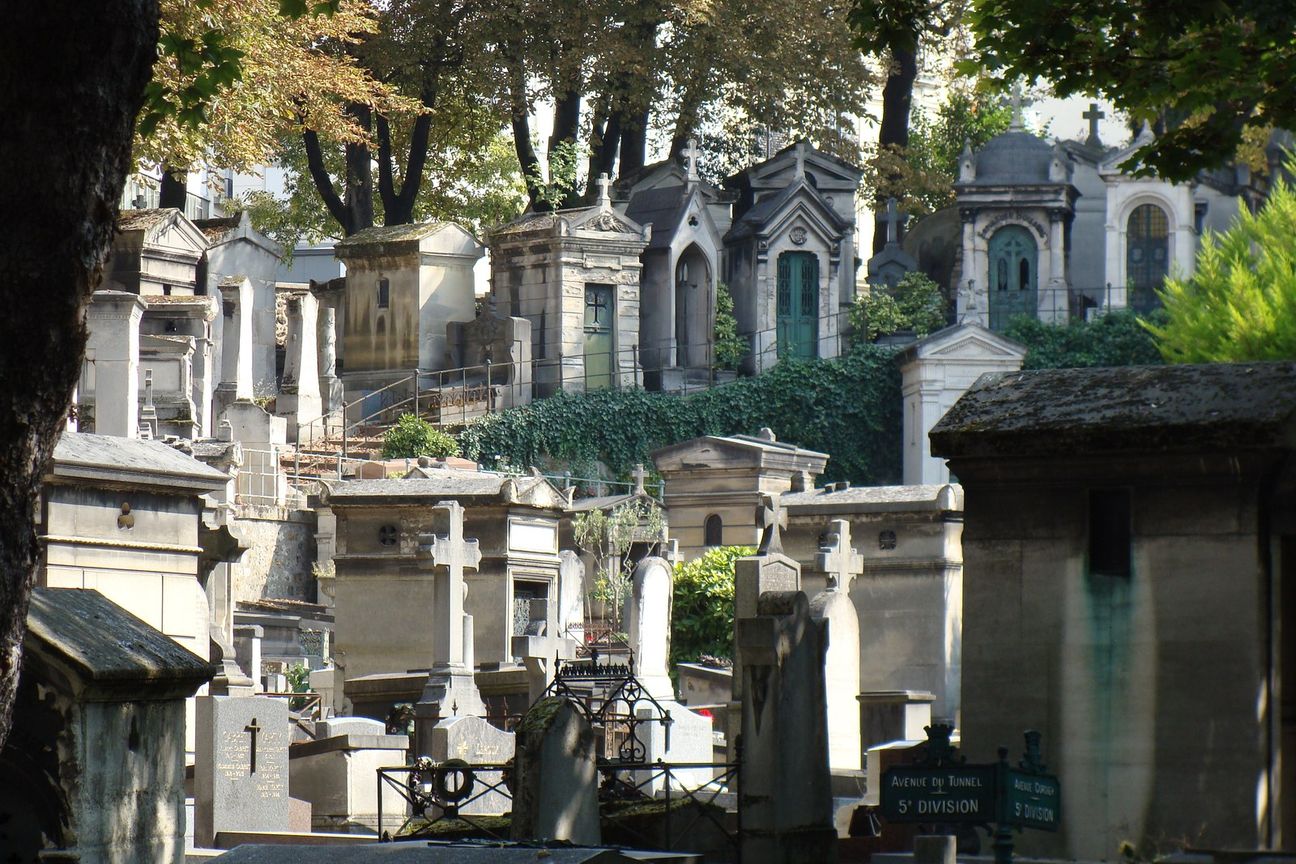
A quiet quarter of Montmartre
Montmartre Cemetery is worth visiting for the way history, architecture and landscape meet within an active cemetery. It contains more than 21,000 graves, yet the place feels less like a catalogue of names than a quiet district with its own avenues, chapels and changing perspectives.
A visit also clarifies a heritage story that is often oversimplified. Two funerary chapels have individual monument historique protection, while the cemetery landscape has been protected through a different site-classification system since 2024. Understanding that distinction makes the architecture and landscape more meaningful.
Along the avenues of remembrance
Montmartre Cemetery asks for a different pace from the streets around it. The avenues invite wandering, yet this remains an active place of burial and remembrance. Moving quietly through the landscape gives the dates, architecture and personal histories room to emerge without turning the visit into a race between famous names.
Before 1825, the Champ du repos
The cemetery officially opened in 1825, but burials had begun here much earlier. Burials were already taking place here in 1798, in an enclosure known as the Champ du repos. That first burial ground was full by 1811, before the larger cemetery took shape.
That earlier layer matters because the present site did not appear on empty ground. Its more than eleven hectares contain traces of a burial history that predates the official opening. Today, the cemetery contains more than 21,000 graves and has entrances on Avenue Rachel and Rue Ganneron.
Rather than trying to understand the whole site at once, begin with its scale. The paths, changes of level and succession of monuments create the feeling of a small city within the city, one built gradually around memory.
Paths, architects and two protected chapels
Pierre-Léonard Laurécisque and Jacques-Ignace Hittorff are among the architects associated with the cemetery’s layout and funerary architecture. Their names help explain why the setting deserves attention beyond individual graves: composition, routes and monuments all contribute to the experience.
Two chapels have individual heritage protection. The Fournier chapel was listed as a monument historique in 2013, while the Potocka chapel was classified in 2014. Those protections concern the chapels themselves; they do not make the entire cemetery a monument historique.
Look at them as part of a broader funerary landscape rather than isolated objects. Their different status also reveals how heritage protection can recognise particular buildings within a much larger site.
A whole landscape protected since 2024
The cemetery itself received another form of recognition under the decree of 29 April 2024, which classified the northern cemetery known as Montmartre as a protected site of the City of Paris. This site classification covers the landscape as an ensemble and is legally distinct from monument historique protection.
The difference may sound administrative, but it changes how the place is read. The chapels receive individual monument historique protection, while the wider classification recognises the cemetery’s historical and picturesque landscape. The two systems remain legally distinct.
That layered protection suits Montmartre Cemetery. Its value lies both in specific works and in the relationships between paths, vegetation, monuments and remembrance. Leave time to notice those connections: the most memorable view is not always the one marked on a map.
Practical notes
Download the official cemetery map before arriving, especially if you want to locate a particular grave or chapel. The main address is 20 Avenue Rachel, with another entrance on Rue Ganneron; choosing your entrance in advance can save a long detour across this extensive site.
Check the current City of Paris page for opening conditions shortly before your visit. Funerals take place here and grieving families have priority, so keep voices low, follow the posted rules and treat the cemetery as a place of remembrance rather than a leisure park.
Accessibility
The City of Paris describes Montmartre Cemetery as accessible to visitors with reduced mobility.
The same official page immediately limits that statement to certain areas and warns that other parts remain difficult to reach. Accessibility therefore varies across the site and should not be understood as a guarantee of a completely step-free visit.
Photo credits
Ivonna Nowicka· CC BY-SA 4.0· Wikimedia Commons · Resized; display crop may vary.
