Find your way
Search Montmartre
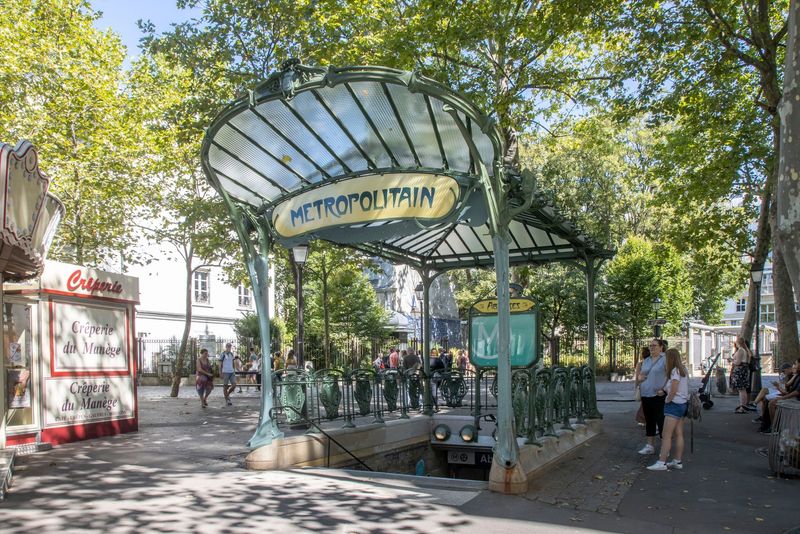
Arthur Weidmann· CC BY-SA 4.0· Wikimedia Commons · Resized; display crop may vary.

All published content
13 results
- PlaceClos Montmartre
Behind the railings of Rue des Saules, Clos Montmartre keeps a municipal vineyard alive with thirty grape varieties on a north-facing plot.
- PlaceMontmartre Cemetery
Opened in 1825, Montmartre Cemetery unfolds across more than eleven hectares of paths, funerary architecture and memories on the side of the hill.
- PlaceMoulin de la Galette
At 77 Rue Lepic, the privately owned Moulin de la Galette survives as a wind-powered Montmartre landmark protected with its surrounding grounds since 1958.
- PlaceMoulin Rouge
Opened in 1889 at the foot of Montmartre, the Moulin Rouge made its balls famous with the cancan and inspired Toulouse-Lautrec. Its red sails still mark the Boulevard de Clichy, near Place Blanche.
- PlaceMusée de Montmartre
Inside the Maison du Bel Air, the Musée de Montmartre brings the hill’s artistic past back to the place where it unfolded. Paintings, artists’ rooms and the Renoir Gardens turn a museum visit into a journey through the neighbourhood’s creative history.
- PlacePlace des Abbesses
Place des Abbesses holds two Montmartre stories at once: its name remembers the abbesses of the old abbey, while its Guimard Métro entrance arrived from elsewhere in Paris.
- PlacePlace du Tertre
Place du Tertre is small enough to cross in moments, yet its few metres hold centuries of Montmartre history and the City-authorised artists who still work in the open air.
- PlacePlace Pigalle
At the foot of Montmartre, Place Pigalle keeps the memory of an old Paris city gate, an eighteenth-century sculptor and the café that serves as the setting of Degas’s “L’Absinthe”.
- PlaceRue de l'Abreuvoir
Rue de l’Abreuvoir may be only 133 metres long, but its route reaches back to a path shown in 1672. Walking it today reveals how one small Montmartre street survived the hill’s transformation—and a decree that nearly erased it.
- PlaceRue Foyatier Steps
Beside the funicular, Rue Foyatier crosses the Montmartre slope through substantial stair sections along a hundred-metre public way.
- PlaceSacré-Cœur Basilica
At the top of the hill, Sacré-Cœur rises above Montmartre with its instantly recognisable silhouette. Behind the postcard image lies a richer story: four decades of building, from the national vow made after the war of 1870 to the basilica’s consecration in 1919.
- PlaceSaint-Pierre de Montmartre Church
Consecrated in 1147, Saint-Pierre de Montmartre is an abbey church where ancient columns, medieval architecture and modern art share the same quiet interior.
- PlaceSquare Louise-Michel
On Montmartre’s southern slope, Square Louise-Michel turns the climb to Sacré-Cœur into a carefully composed landscape of stairs, paths and planting.
No published result matches this search.