Explore Montmartre
Places and their stories
From must-sees to quiet streets, find your next discovery.
13 places
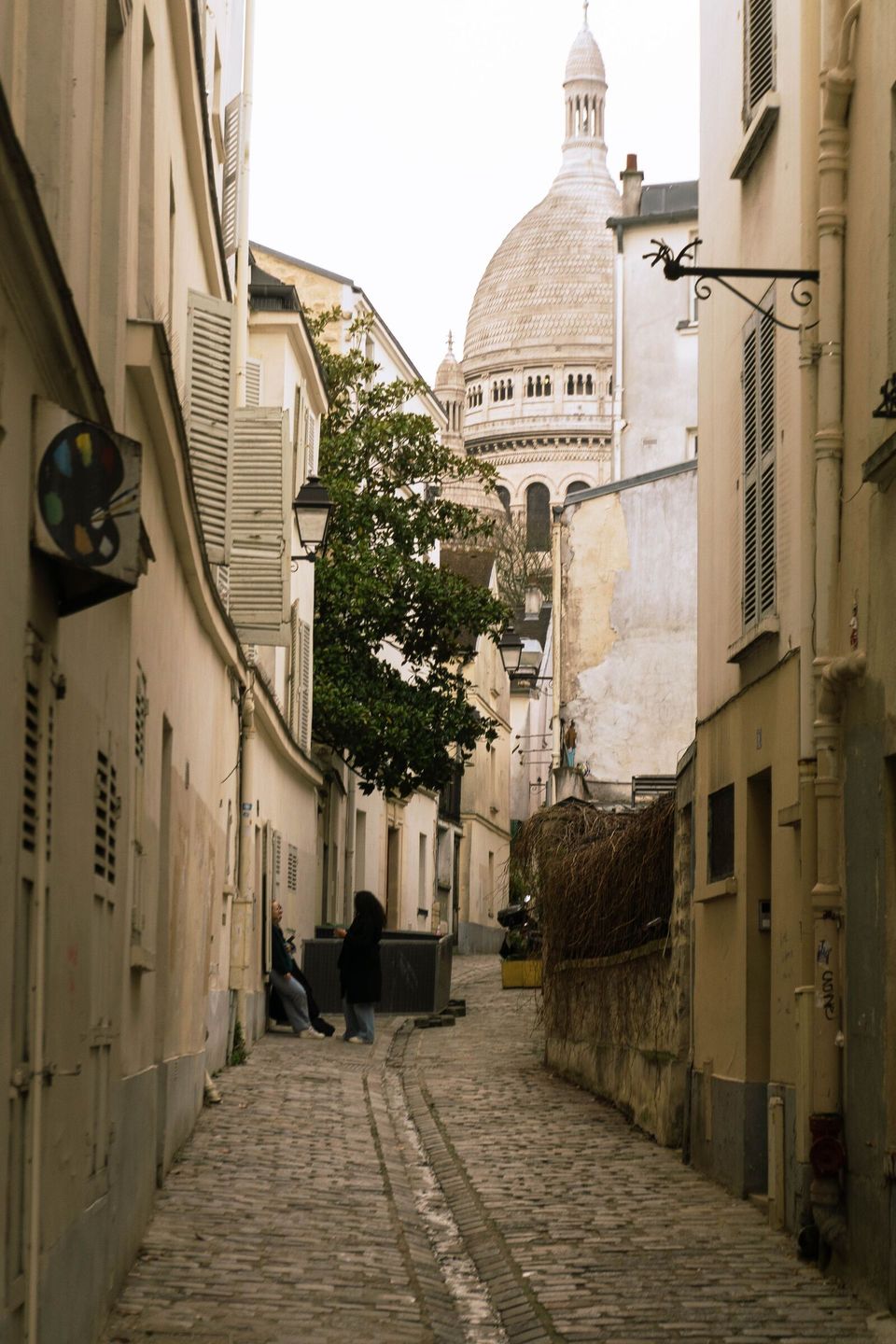
Religious site
Sacré-Cœur Basilica
At the top of the hill, Sacré-Cœur rises above Montmartre with its instantly recognisable silhouette. Behind the postcard image lies a richer story: four decades of building, from the national vow made after the war of 1870 to the basilica’s consecration in 1919.
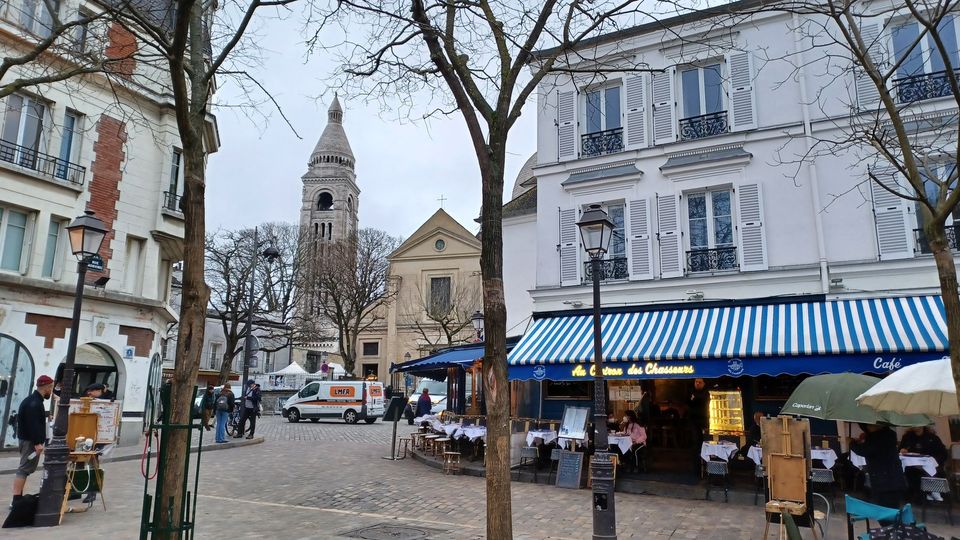
Square
Place du Tertre
Place du Tertre is small enough to cross in moments, yet its few metres hold centuries of Montmartre history and the City-authorised artists who still work in the open air.
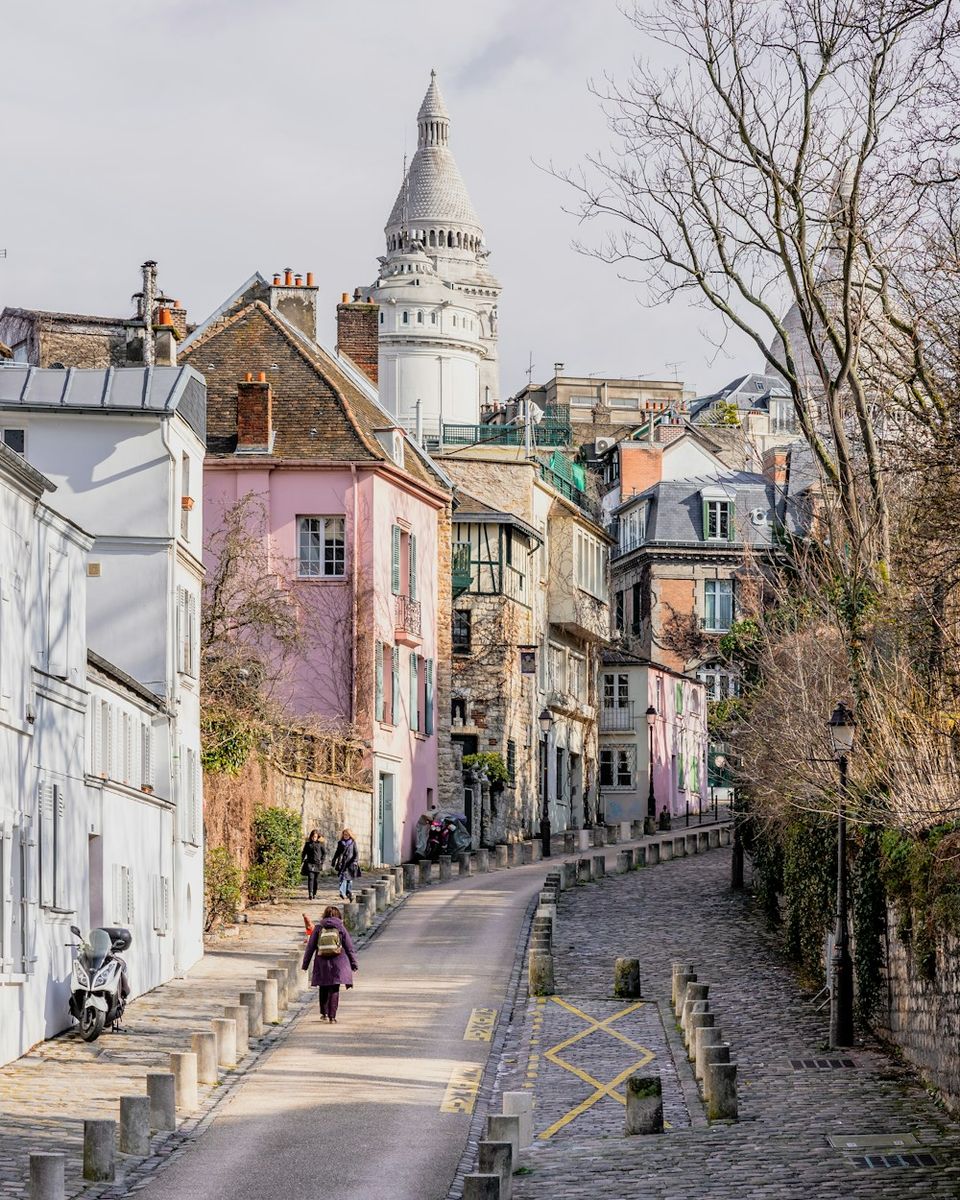
Street
Rue de l'Abreuvoir
Rue de l’Abreuvoir may be only 133 metres long, but its route reaches back to a path shown in 1672. Walking it today reveals how one small Montmartre street survived the hill’s transformation—and a decree that nearly erased it.
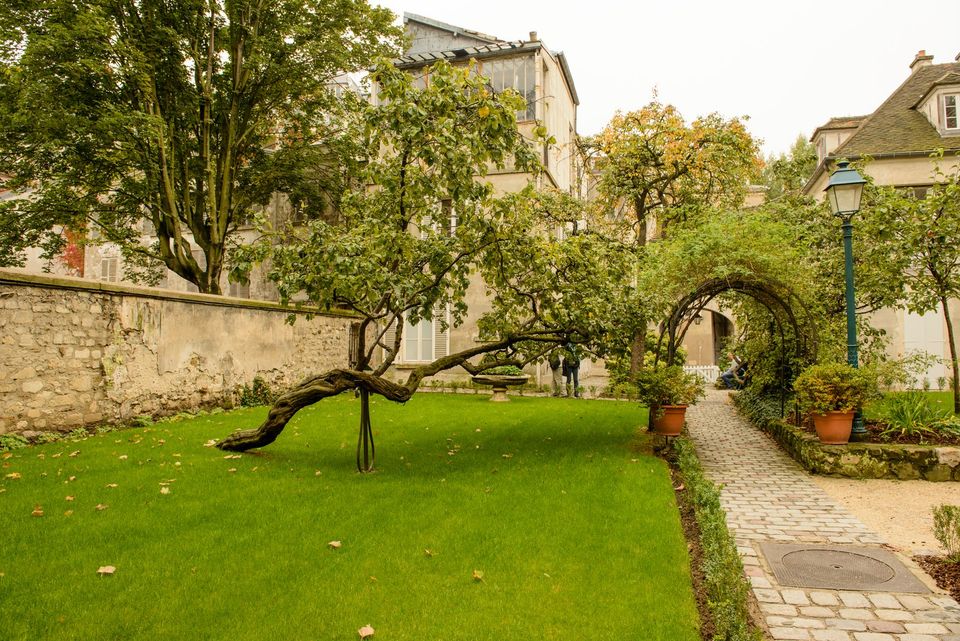
Museum
Musée de Montmartre
Inside the Maison du Bel Air, the Musée de Montmartre brings the hill’s artistic past back to the place where it unfolded. Paintings, artists’ rooms and the Renoir Gardens turn a museum visit into a journey through the neighbourhood’s creative history.
Square
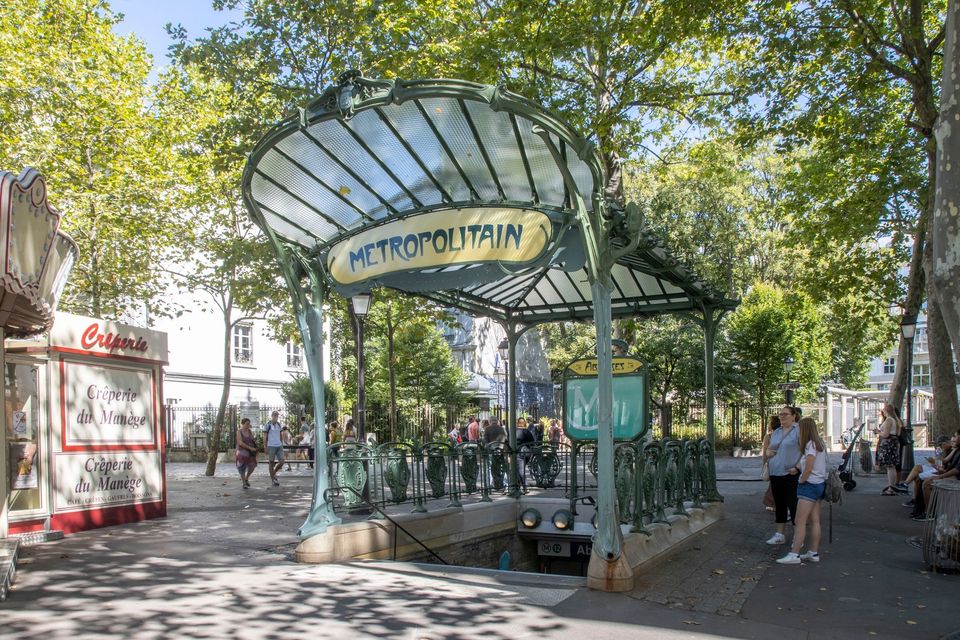
Place des Abbesses
Place des Abbesses holds two Montmartre stories at once: its name remembers the abbesses of the old abbey, while its Guimard Métro entrance arrived from elsewhere in Paris.
Vineyard
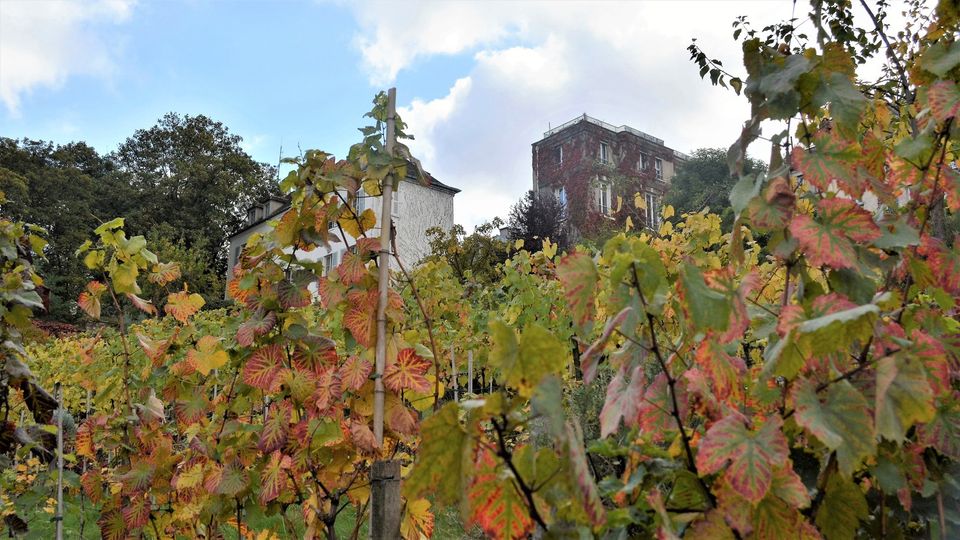
Clos Montmartre
Behind the railings of Rue des Saules, Clos Montmartre keeps a municipal vineyard alive with thirty grape varieties on a north-facing plot.
Religious site
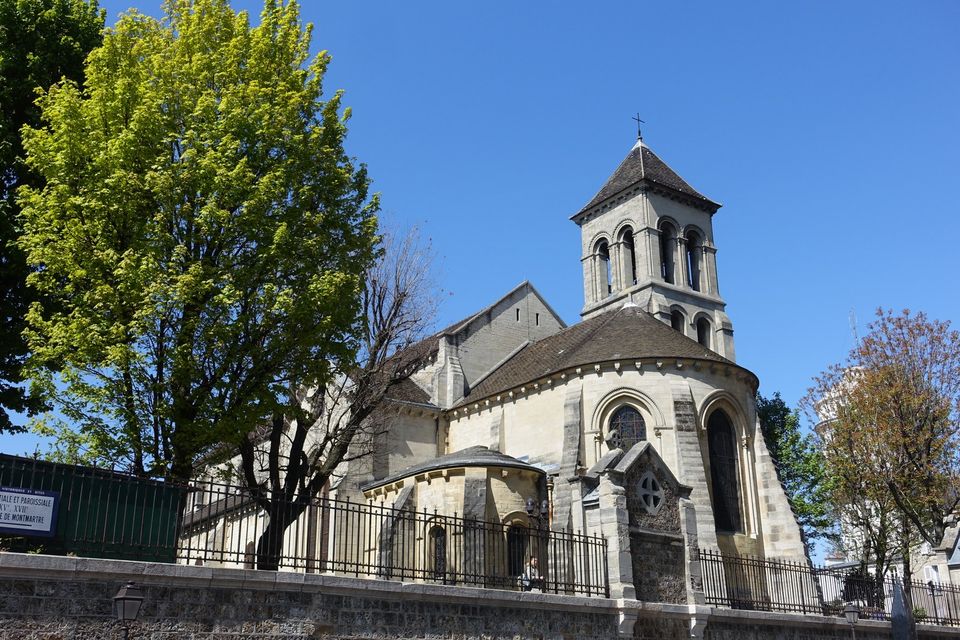
Saint-Pierre de Montmartre Church
Consecrated in 1147, Saint-Pierre de Montmartre is an abbey church where ancient columns, medieval architecture and modern art share the same quiet interior.
Cemetery
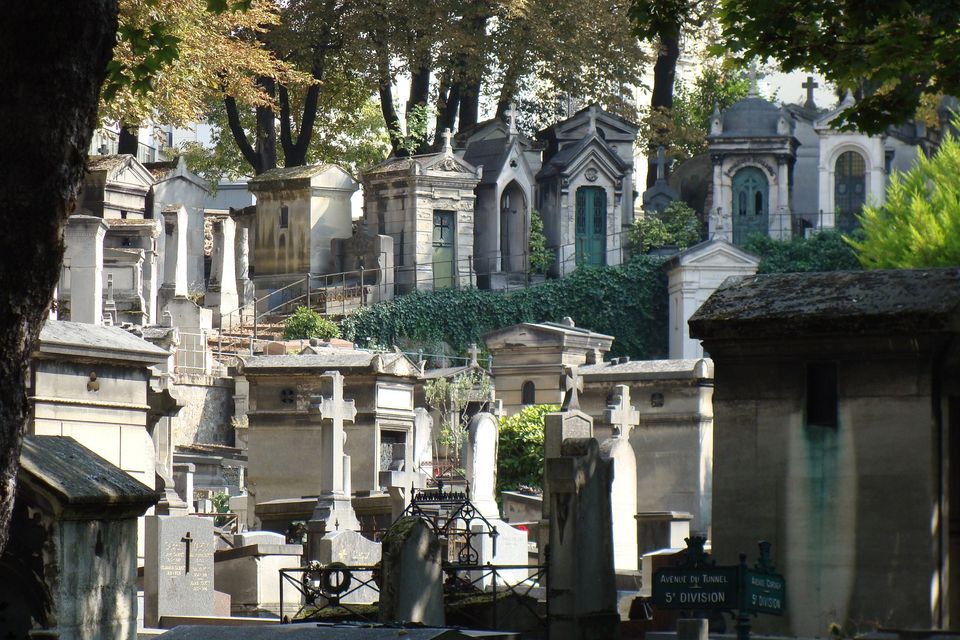
Montmartre Cemetery
Opened in 1825, Montmartre Cemetery unfolds across more than eleven hectares of paths, funerary architecture and memories on the side of the hill.
Park
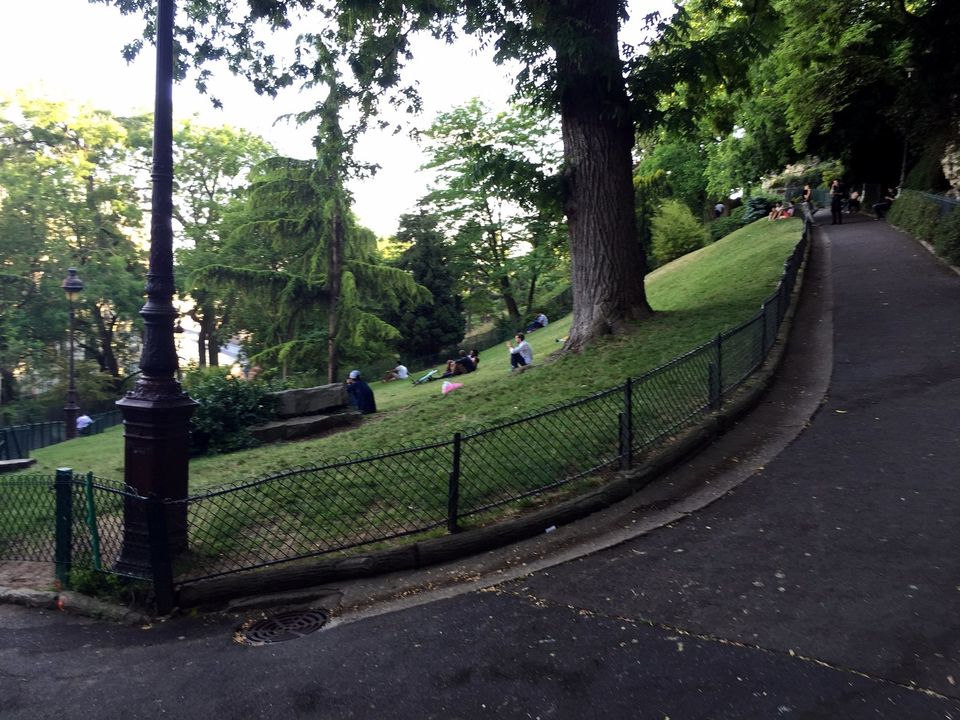
Square Louise-Michel
On Montmartre’s southern slope, Square Louise-Michel turns the climb to Sacré-Cœur into a carefully composed landscape of stairs, paths and planting.
Landmark
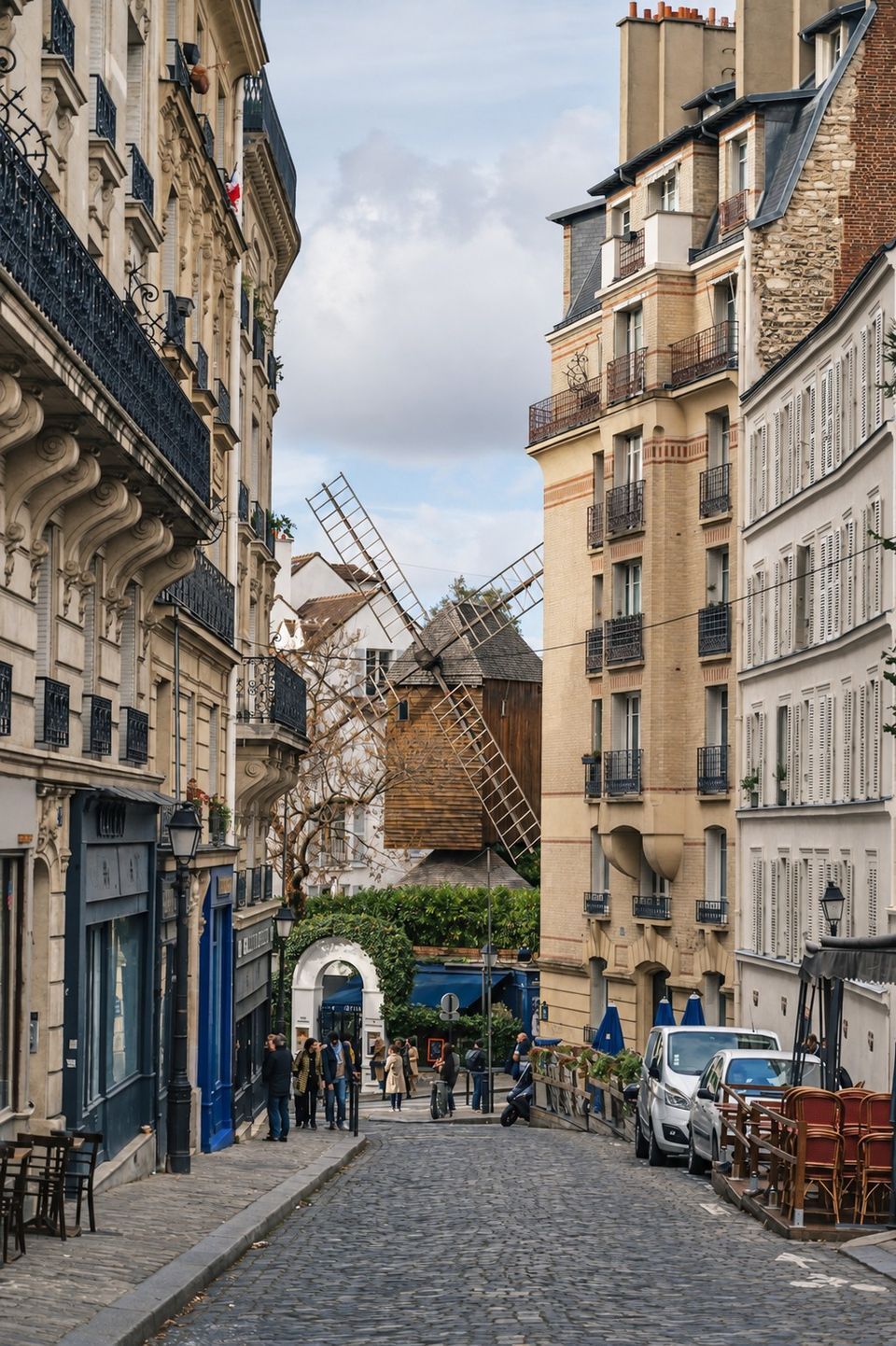
Moulin de la Galette
At 77 Rue Lepic, the privately owned Moulin de la Galette survives as a wind-powered Montmartre landmark protected with its surrounding grounds since 1958.
Landmark
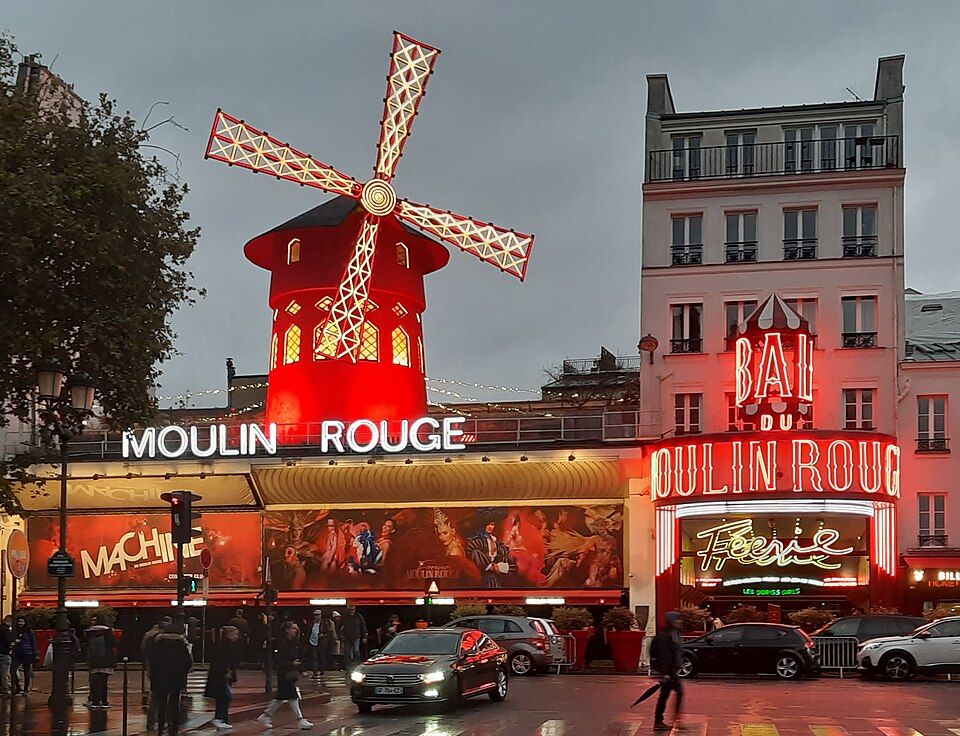
Moulin Rouge
Opened in 1889 at the foot of Montmartre, the Moulin Rouge made its balls famous with the cancan and inspired Toulouse-Lautrec. Its red sails still mark the Boulevard de Clichy, near Place Blanche.
Staircase
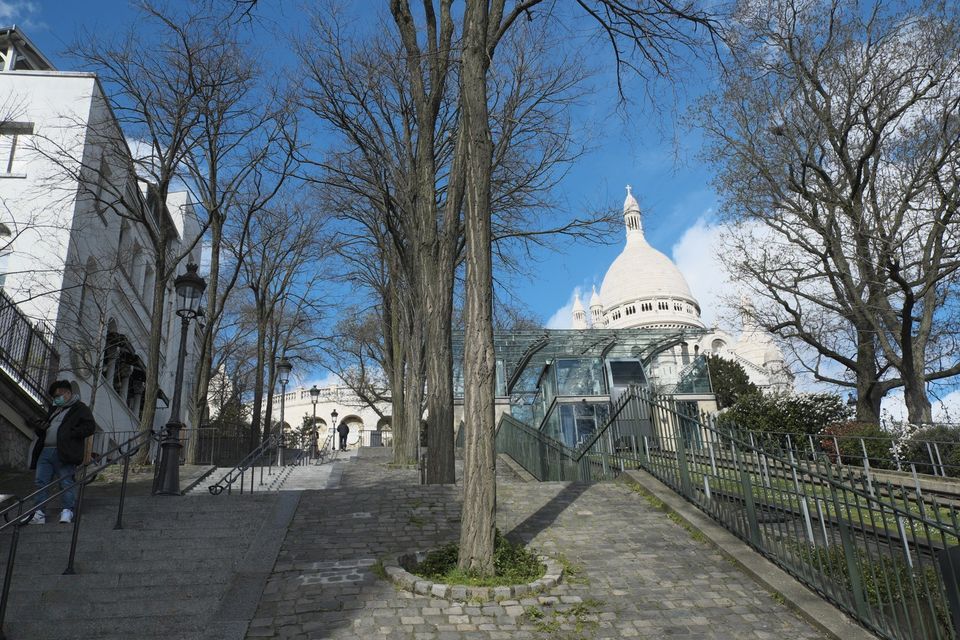
Rue Foyatier Steps
Beside the funicular, Rue Foyatier crosses the Montmartre slope through substantial stair sections along a hundred-metre public way.
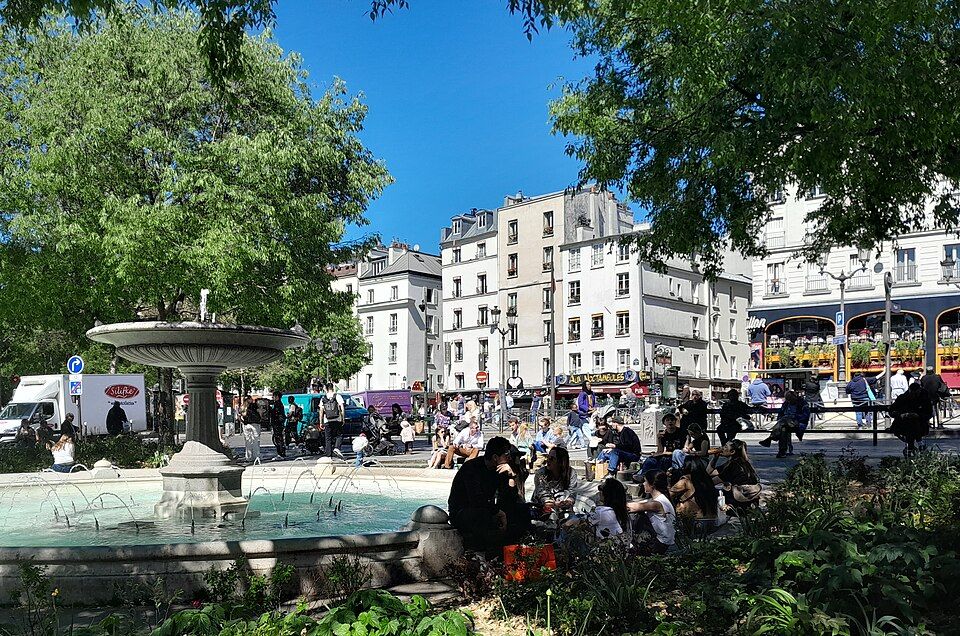
Square
Place Pigalle
At the foot of Montmartre, Place Pigalle keeps the memory of an old Paris city gate, an eighteenth-century sculptor and the café that serves as the setting of Degas’s “L’Absinthe”.
Photo credits
- Place du Tertre
Jean-Paul Corlin· CC BY-SA 4.0· Wikimedia Commons · Resized; display crop may vary.
- Musée de Montmartre
Son of Groucho· CC BY 2.0· Wikimedia Commons · Resized; display crop may vary.
- Place des Abbesses
Arthur Weidmann· CC BY-SA 4.0· Wikimedia Commons · Resized; display crop may vary.
- Clos Montmartre
Carl Campbell· CC BY-SA 2.0· Wikimedia Commons · Resized; display crop may vary.
- Saint-Pierre de Montmartre Church
Guilhem Vellut· CC BY 2.0· Wikimedia Commons · Resized; display crop may vary.
- Montmartre Cemetery
Ivonna Nowicka· CC BY-SA 4.0· Wikimedia Commons · Resized; display crop may vary.
- Square Louise-Michel
Benoît Prieur· CC0 1.0· Wikimedia Commons · Resized; display crop may vary.
- Moulin Rouge
Anvilaquarius· CC0 1.0· Wikimedia Commons · Resized; display crop may vary.
- Rue Foyatier Steps
GFreihalter· CC BY-SA 3.0· Wikimedia Commons · Resized; display crop may vary.
- Place Pigalle
Paul de Belleville· CC0 1.0· Wikimedia Commons · Resized; display crop may vary.


