Religious site
Sacré-Cœur Basilica
History, architecture and perspectives on Montmartre.
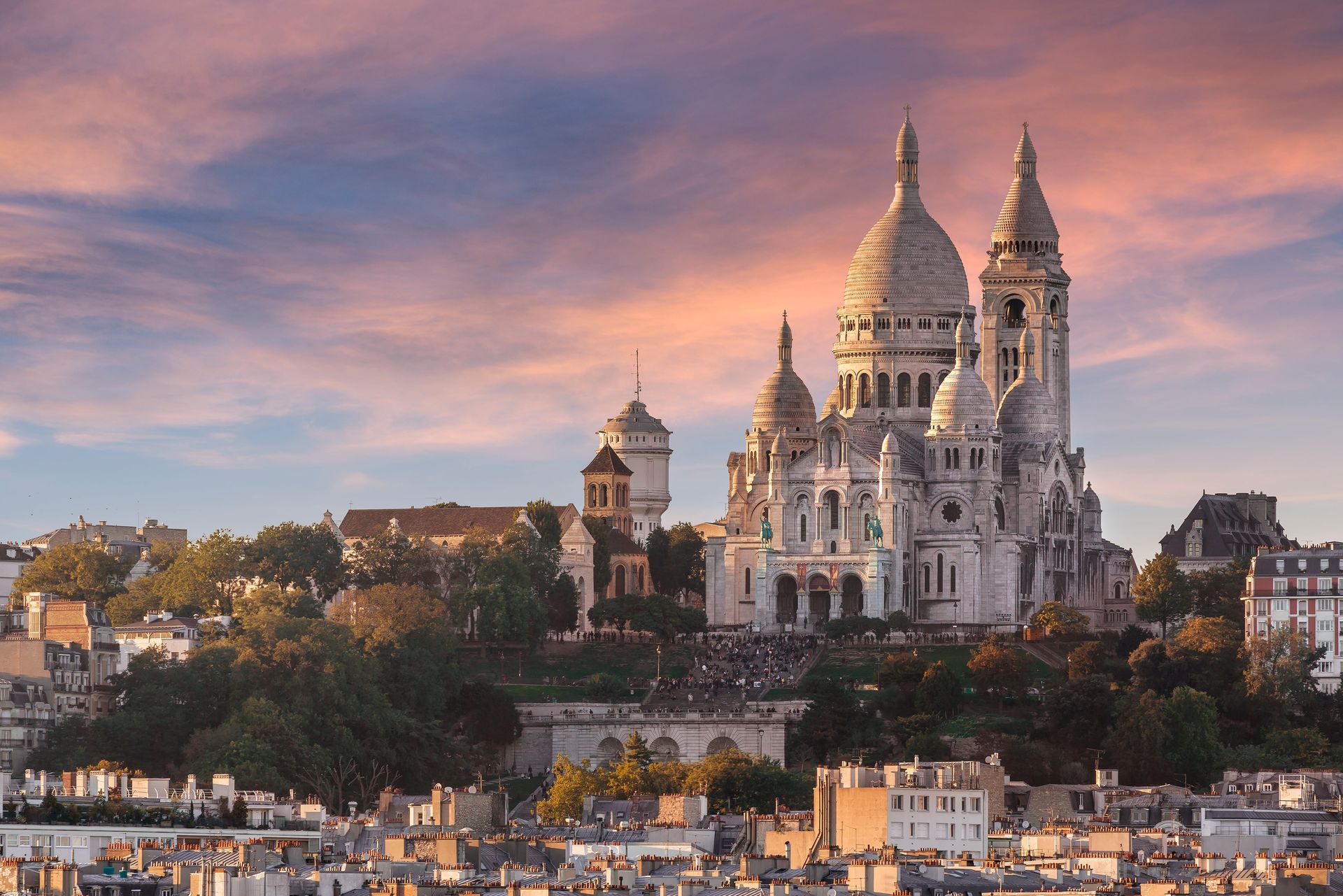
Viator · ENAt the top of the hill, Sacré-Cœur rises above Montmartre with its instantly recognisable silhouette. Behind the postcard image lies a richer story: four decades of building, from the national vow made after the war of 1870 to the basilica’s consecration in 1919.
Selected by ArthurYour visit at a glance
Behind the familiar silhouette
Sacré-Cœur is worth visiting for more than its place among Montmartre’s great landmarks. Step inside and you can follow how the building took shape architect by architect, through an interior whose elements belong to different moments in its history.
The crypt, upper church, choir mosaic and dome together tell the story of nearly half a century of work. That sequence is what makes the basilica so interesting: it was not conceived and completed in one uninterrupted gesture, but slowly shaped over time.
A basilica built across generations
Reaching the top of the hill, you might imagine that Sacré-Cœur has always been part of Montmartre. Its white silhouette seems so inseparable from the neighbourhood that the hill is difficult to picture without it. Yet the basilica’s history is relatively recent, and its construction was far from simple.
Four decades: Paul Abadie and five successors
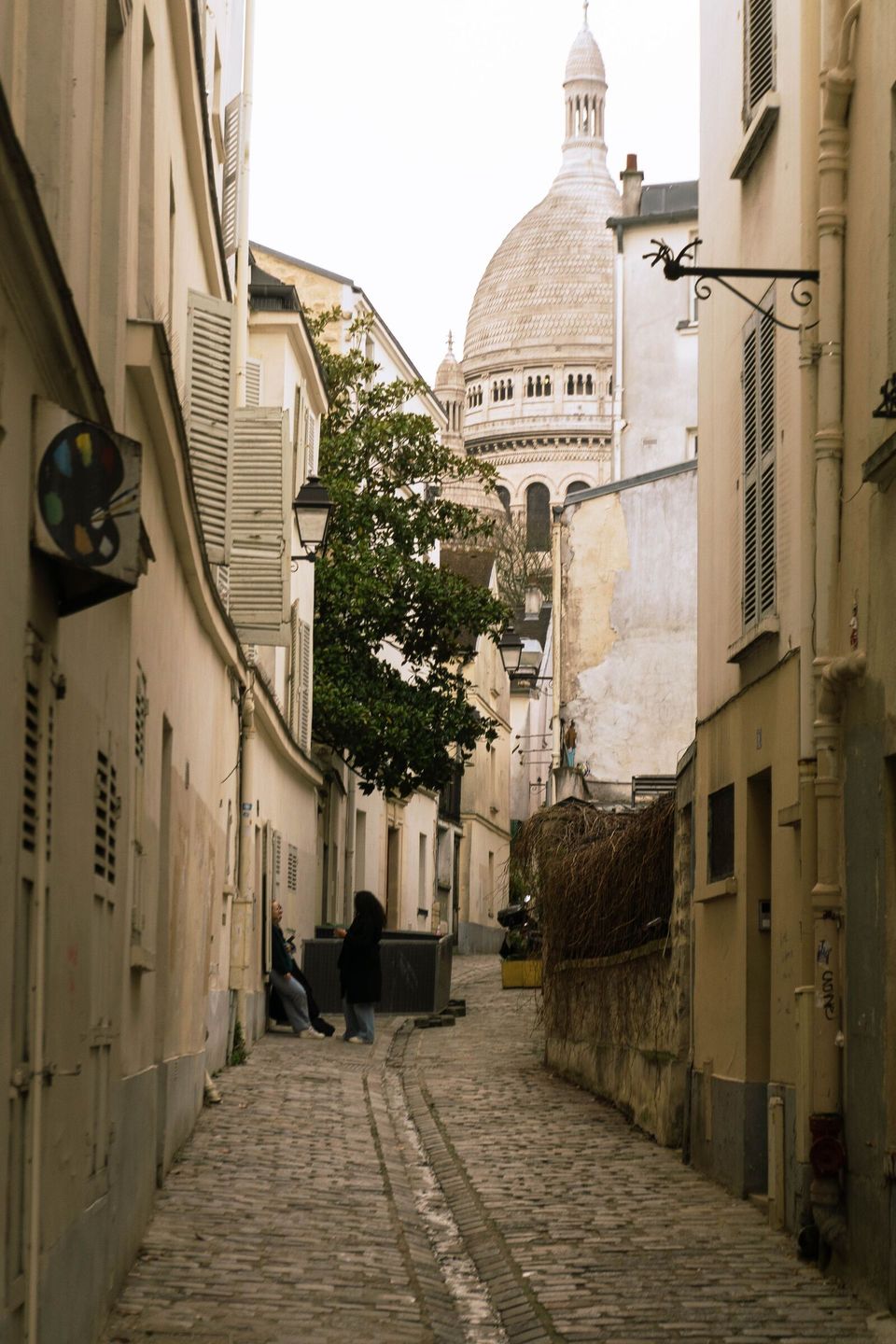
The story begins after the war of 1870, with the national vow that inspired the project. In 1874, architect Paul Abadie won the competition to design the future basilica. Work could begin, but it would continue for four decades.
After Abadie’s death, five architects succeeded him. Charles Garnier, best known for the Paris opera house that bears his name, also served as an adviser. This long succession helps explain why Sacré-Cœur can feel as though it is telling several stories at once.
Crypt, mosaic and consecration: a monument in layers
The bell tower was not completed until 1914. The church was already welcoming worshippers when it was officially consecrated in 1919. The monument therefore did not follow a perfectly linear path: some parts came to life while others were still being completed.
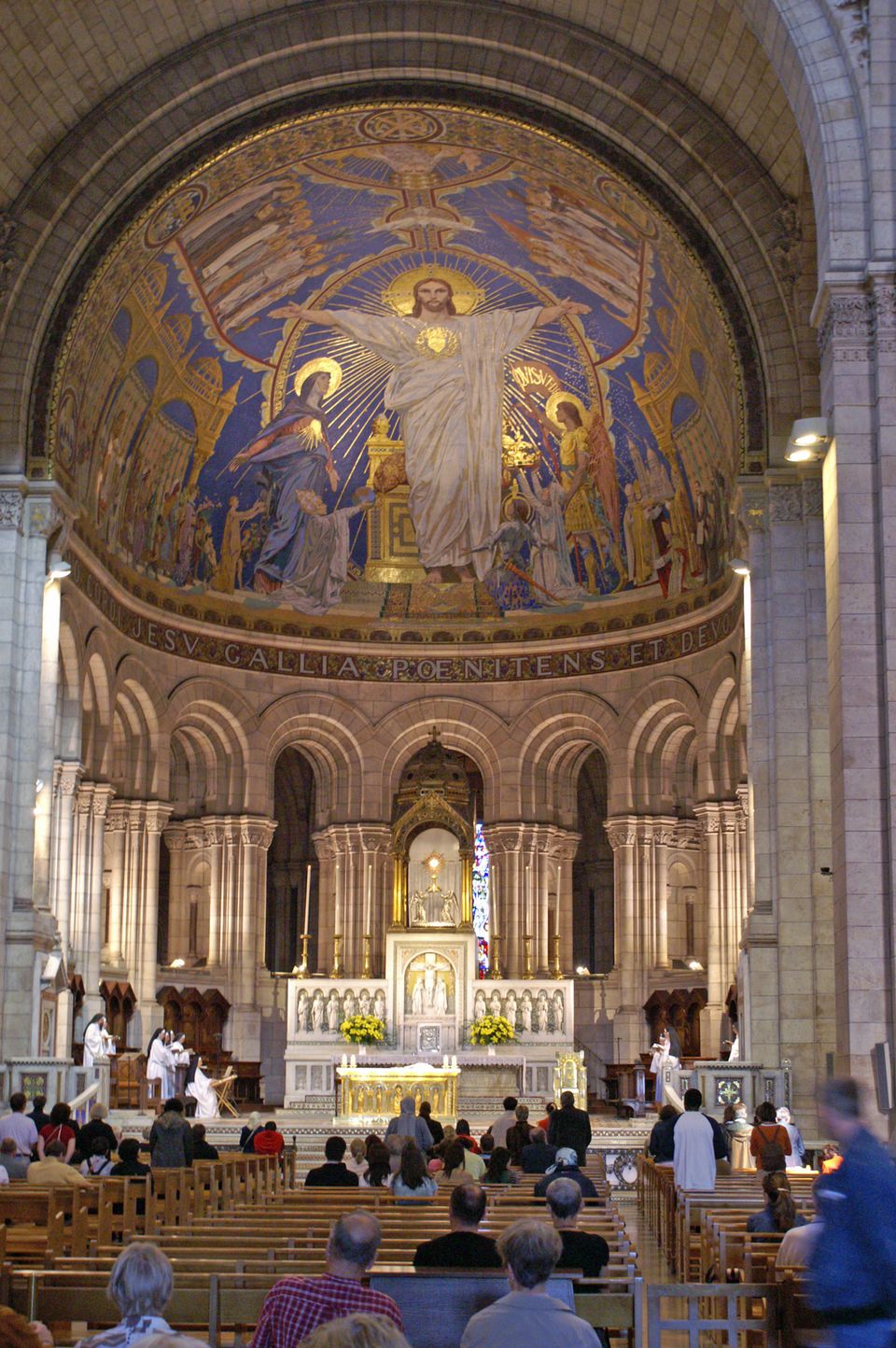
That chronology is especially visible inside. The crypt was built before the upper church, while the great choir mosaic was not completed until 1923. As you move through the basilica, you discover a building assembled gradually, layer after layer, rather than a setting created all at once.
The dome and a late heritage recognition
The dome is a distinct experience from visiting the church. Reaching it means climbing a narrow staircase of 280 steps, with no elevator. The ascent takes real effort and will not suit everyone, but it reveals another dimension of the monument.
In December 2022, the basilica was classified as a monument historique. That late recognition is a reminder that, despite its worldwide fame, Sacré-Cœur is still writing its heritage story today.
That is probably what makes the visit so rewarding. Behind the familiar landmark is a more complex basilica, born from a historic project, shaped by several generations of architects and completed in stages over nearly half a century.
Plan your visit
Practical notes
Think of the church visit and the dome climb as two separate experiences. If you plan to climb the dome, wear comfortable shoes and make sure you are at ease with a narrow staircase of 280 steps.
Inside the church, look beyond the great mosaic. The arrangement of the different spaces helps reveal the successive stages of the basilica’s construction.
Accessibility
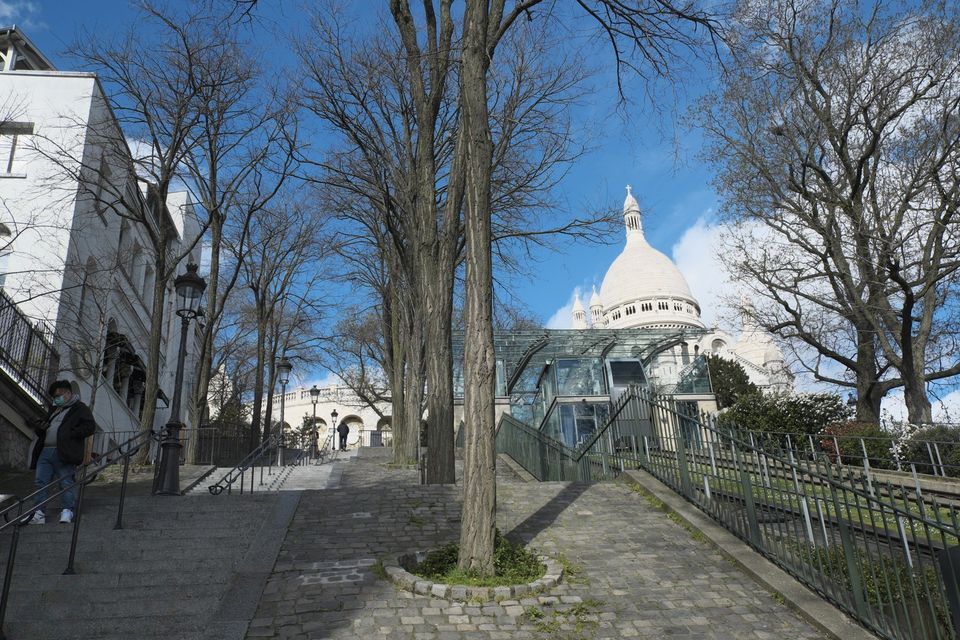
An elevator at the rear of the basilica, on Rue du Chevalier de la Barre, provides access to the church.
The dome can only be reached by a narrow staircase of 280 steps. There is no elevator, and the climb is not recommended for visitors with reduced mobility.
Discover Montmartre with a guide
A walk around the neighbourhood. This offer is not an admission ticket to the basilica or its dome.
Paris Montmartre Walking Tour Best Art Culture and Food
Check availability on ViatorOffer presented in English. Check dates, tour languages, prices and conditions on Viator.
Transparency — MontmartreGuide may receive a commission if you book through links on this page.
Photo credits
Didier B (Sam67fr)· CC BY-SA 2.5· Wikimedia Commons · Resized; display crop may vary.

GFreihalter· CC BY-SA 3.0· Wikimedia Commons · Resized; display crop may vary.
