Vineyard
Clos Montmartre
Behind the railings of Rue des Saules, Clos Montmartre keeps a municipal vineyard alive with thirty grape varieties on a north-facing plot.
Selected by Arthur
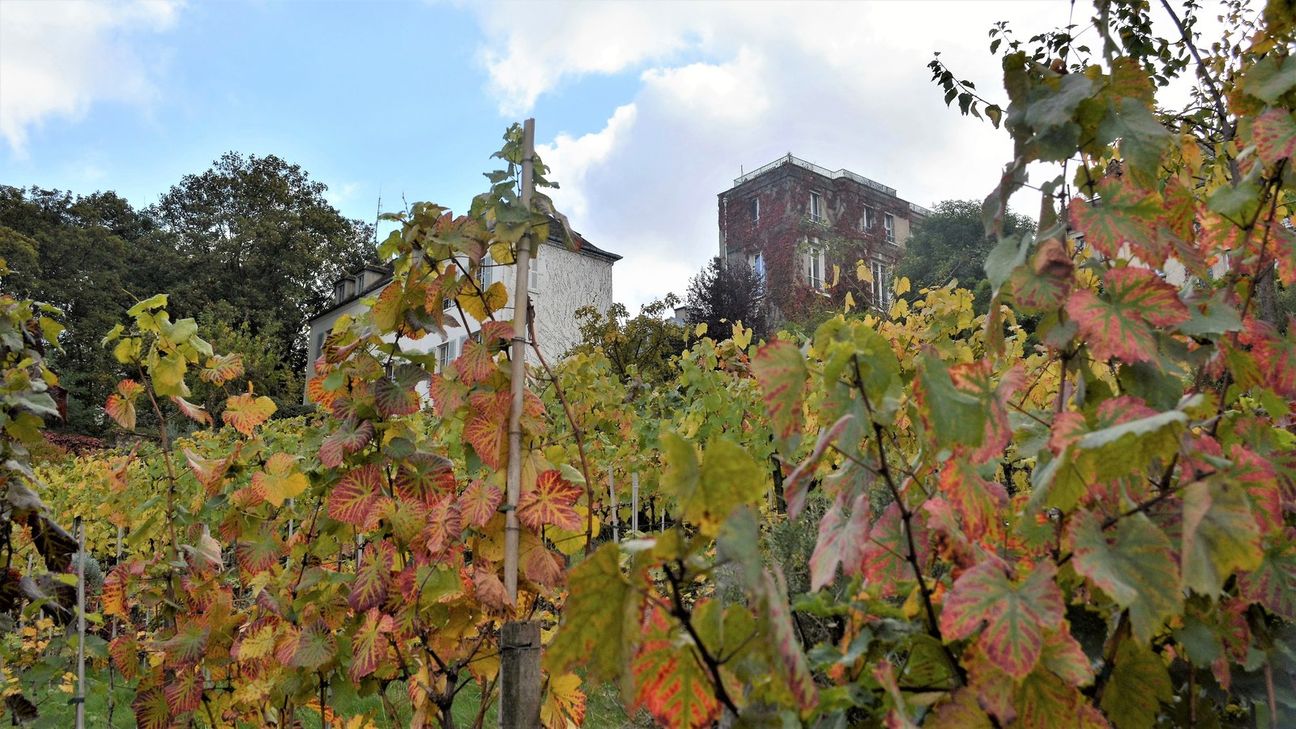
Vines among the Paris streets
Clos Montmartre is one of those places that makes the hill seem delightfully improbable. Between the buildings of Rue des Saules, rows of vines appear where you might expect uninterrupted Parisian streets. Even seen through the railings, the vineyard slows the pace of a Montmartre walk.
It is far more than a picturesque surprise. Residents acted to save the land from development, and vines were planted here in 1933. That gesture links a local campaign to a living cycle of cultivation, harvest and winemaking. With thirty grape varieties and a social purpose, the small enclosure tells a story that reaches well beyond the photographs taken from the pavement.
A vineyard preserved on the Butte
The first surprise is the scale. Clos Montmartre is not a country estate transplanted to Paris, but a compact vineyard carefully fitted into the hill. Its modest size is precisely what makes it so engaging: each row, railing and change of level shows how cultivation has found a place within the city.
A vineyard saved from development
The vineyard’s modern story begins in 1933, when local residents planted vines to protect the plot from development. The gesture was practical as well as symbolic: agricultural use gave the land a future that could be renewed with every season.
The first harvest festival followed in 1934. This quick passage from planting to collective celebration explains why the vineyard belongs as much to Montmartre’s community history as to its landscape. The festival grew directly from a project that had changed the future of the plot.
From Rue des Saules, try to imagine that decision before looking more closely at the vines. What survives is not an untouched piece of countryside, but a deliberately preserved space shaped by local action.
Thirty varieties on a north-facing slope
The municipal plot covers 2,038 square metres in total, including 1,730 square metres recorded as horticultural area. It is enclosed, faces north and contains thirty different grape varieties. The figures give a sense of scale without reducing the vineyard to statistics.
A north-facing parcel in Montmartre is not the sun-drenched vineyard of a travel poster, and that contrast is part of its character. Notice how the rows follow the enclosed slope and coexist with the surrounding architecture. The city is not just a backdrop here; it is part of the vineyard’s identity.
The number of varieties also makes the Clos more intriguing than a uniform planting. You do not need to recognise each vine from the pavement to appreciate the idea: remarkable diversity is cultivated within a very limited area.
From harvest to the town-hall cellars
The story continues after the grapes leave Rue des Saules. The harvest is taken to the cellars of the 18th-arrondissement town hall, where it is made into wine without sulphites. The vineyard and the winemaking site are two distinct stages of the same municipal process.
Proceeds from the wine support the social work of the Comité des Fêtes et d’Action Sociale de Montmartre et du 18e. This gives the vineyard a purpose beyond preserving a charming view: its harvest contributes to local community action.
Taken as a whole, Clos Montmartre tells a remarkably complete story. Residents protected the land, vines took root, a harvest festival began, the grapes continue to be made into wine locally and the proceeds support social work. That continuity turns a small enclosed plot into one of the hill’s most meaningful living landmarks.
Practical notes
Use 14 Rue des Saules as your reference; the entrance is recorded between numbers 14 and 18. The City of Paris currently states that the enclosed vineyard can be entered only on guided visits, so do not expect to walk in as you would enter a public garden.
Check the official City of Paris venue page shortly before going, as access arrangements may change. Without a guided visit, the railings still offer a good view from the street. Follow the latest official information for tour dates, prices and any booking instructions rather than relying on a fixed schedule.
Photo credits
Carl Campbell· CC BY-SA 2.0· Wikimedia Commons · Resized; display crop may vary.
.jpg)