Religious site
Saint-Pierre de Montmartre Church
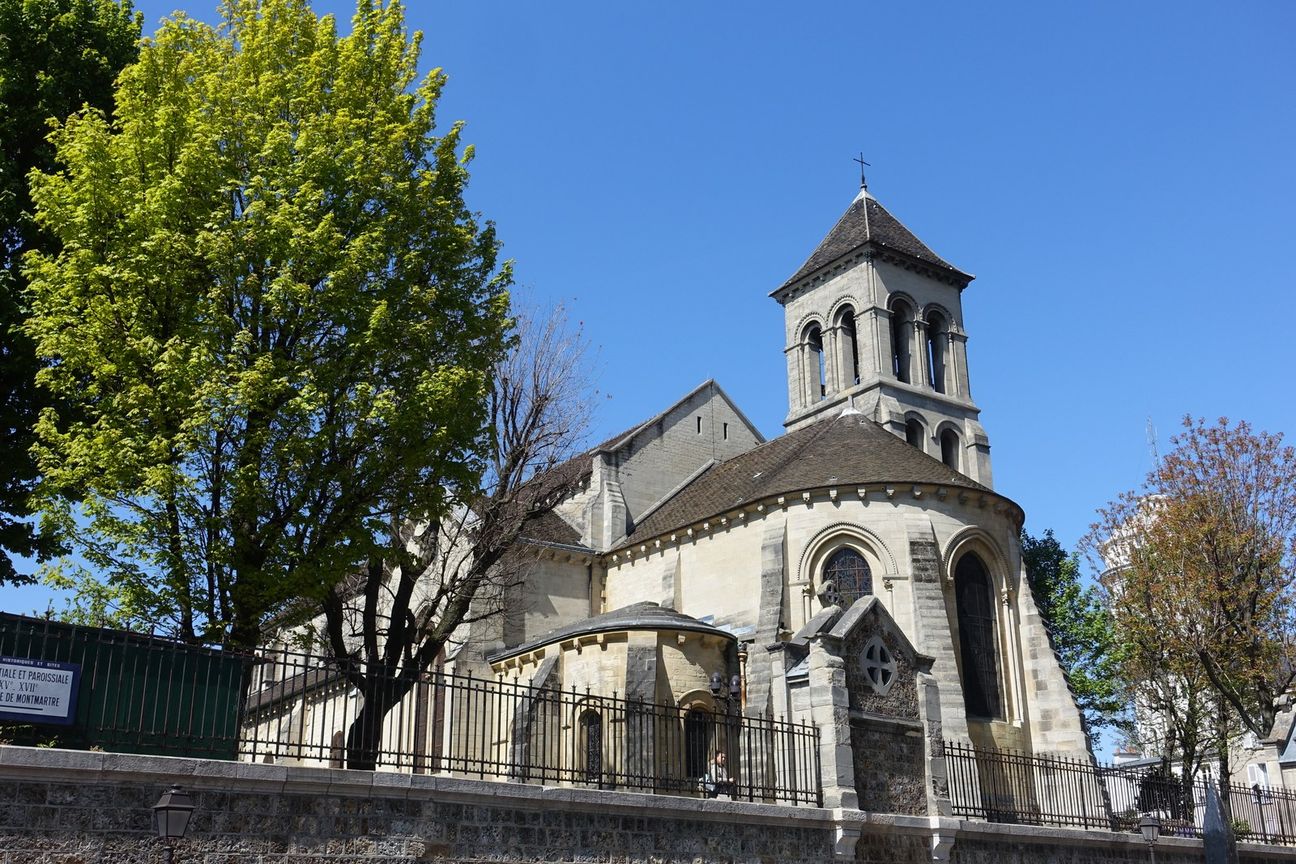
Consecrated in 1147, Saint-Pierre de Montmartre is an abbey church where ancient columns, medieval architecture and modern art share the same quiet interior.
Selected by Arthur
Centuries within one church
Saint-Pierre de Montmartre rewards a slower kind of attention. Its main building campaign dates from the twelfth century, yet the church preserves traces of much earlier history alongside works added centuries later. Reading those layers is the real pleasure of the visit.
Come for the ancient columns and medieval structure, then stay for the details that extend the story into the twentieth and twenty-first centuries. Stained glass, bronze doors and the Cavaillé-Coll organ turn the interior into a concise journey through Montmartre’s religious and artistic history.
From ancient columns to modern works
No single spectacular feature tells the whole story of Saint-Pierre de Montmartre. Its character comes from the way very different periods meet: an earlier place of worship, a twelfth-century church, centuries of devotional art and several distinctly modern additions. The best way to explore it is to let your eyes move through time rather than trying to take in everything at once.
A twelfth-century church on an earlier place of worship
The main construction campaign belongs to the twelfth century, but the story of the site begins earlier. An oratory dedicated to Saint Denis once stood here, before Louis VI founded a Benedictine women’s abbey on the site. The church that survives today preserves the memory of that larger religious foundation.
In 1147, the church was consecrated by Pope Eugene III, Bernard of Clairvaux and Peter the Venerable. That date offers a useful anchor when looking at the building: the Diocese of Paris describes its architecture as anticipating the emerging Gothic style, placing the church at a moment when medieval architecture was beginning to change.
This is not a history that needs to be rushed. Look first at the building’s proportions and structural supports rather than searching immediately for individual works. The medieval structure provides the thread that holds every later addition together.
Ancient columns and centuries of art
Inside, the ancient columns are among the clearest signs that the building’s story reaches beyond a single construction campaign. Their presence gives the interior a sense of accumulated time: stone from a distant past still stands among works added centuries later.
The works of art add further layers. Paintings are attributed to Ribera, Guercino and Parrocel; that wording matters because the artists’ authorship is not presented as certain. Nearby, the statue of Notre-Dame-de-Beauté is presented as the patroness of the Butte and of artists, linking devotion with Montmartre’s creative identity.
Pause before moving on. The church is most compelling when these elements are not treated as a checklist. Architecture, ancient columns, paintings and sculpture work together to show how a living place can preserve traces from very different centuries.
Glass, bronze and an organ that extend the story
The later additions are not footnotes. Max Ingrand’s stained-glass windows, dating from 1954, bring twentieth-century colour into the medieval setting. Tomaso Gismondi’s bronze doors date from 1980, and Jean-Paul Froideveaux’s liturgical furnishings from 2005. Each intervention belongs visibly to its own period.
The organ offers another precise chronological detail. It was built by Cavaillé-Coll in 1868, while its eighteenth-century case has a separate listing under France’s monuments historiques system. Keeping those two facts apart makes the chronology clearer: the organ itself and its decorative case do not come from the same period.
Owned by the municipality, Saint-Pierre de Montmartre was classified as a monument historique by a certificate dated 23 May 1923. Yet the visit feels less like entering a frozen monument than reading a place that has evolved across the centuries. That layering, from the earlier oratory to the modern furnishings, is what gives the church its quiet depth.
Practical notes
Treat the interior as a chronological walk. Begin with the ancient columns and the twelfth-century structure, then look for the paintings and statue before finishing with the stained glass, bronze doors and organ. This order makes the many periods easier to understand.
Saint-Pierre de Montmartre remains an active parish church, so access and service times may change. Consult the official Diocese of Paris parish page shortly before your visit and allow worship to take priority if a service is taking place.
Photo credits
Guilhem Vellut· CC BY 2.0· Wikimedia Commons · Resized; display crop may vary.
.jpg)